Q&A from the “Minimizing Exposure, Liability, and Risk in Trade Compliance” Webinar

webinar_image_200x200Amber Road would like to thank all of those who attended our Minimizing Exposure, Liability, and Risk in Trade Compliance webinar. The attendees asked some great questions, but unfortunately, we ran out of time and were unable to answer all of them. The presenters were kind enough to provide us with written responses to those questions. Here are a few:

  • As a senior compliance professional, do I need insurance similar to our C-level leadership?
    One can make the case that Empowered Officials and senior trade compliance professionals should be covered the same way senior executives and others in the organization are (including the board of directors). To my knowledge there’s no separate insurance package or coverage available for EOs and senior trade compliance professionals. With the job’s level of responsibility it’s certainly a worthwhile consideration.
  • From an enforcement perspective are there cases where an Empowered Official or Responsible Authority went to jail?
    I do not know of any case where an EO went to jail. I do know of cases where the EO (or other trade compliance professional) was put on administrative leave, fired, demoted, sued by the corporation for breach of contract, and investigated personally by Justice. There are many cases where senior staff (i.e. VPs and above) have gone to jail and suffered many other negative outcomes, including significant fines and debarment.

Don’t see the question you asked? Follow this link to see a full list of questions and answers.

EmailPrintFacebookTwitterDeliciousDiggEvernoteGoogle+LinkedInPinterestRedditStumbleUponTumblrBookmark/FavoritesShare

CBP Prepares to Enter Liquidated Damages Phase of the ISF

ISF 10+2The US Customs and Border Protection (CBP) announced that it will begin the liquidated damages phase of the Importer Security Filing (ISF) on July 9, 2013. These ISF enforcement phases are designed to help CBP make more informed targeting decisions regarding high-risk US-bound cargo.

Starting next month, liquidated damages of $5,000 per violation will be issued for inaccurate, incomplete, or untimely filings. CBP may also withhold the release or transfer of cargo for which an ISF has not been filed. Noncompliant cargo will also be subject to further inspections.

The ISF requires importers and carriers to electronically submit additional cargo information at least 24 hours before ocean freight is loaded onto a vessel bound for the US. It was designed to increase the amount of shipment information available to the CBP in order to better identify potential terrorist threats.

While many shippers have slacked off with ISF compliance, that will all change with the implementation of liquidated damages. According to Albert Saphir, president of ABS Consulting, “responsible importers that spent a lot of time and effort (money) on creating a good and compliant ISF program will receive the benefit they deserve when those importers not compliant will finally need to ‘get with the program’ or face significant monetary penalties.”

For more information, please read this Logistics Management article and CBP’s press release.

Is your company prepared to avoid these costly fines? Click here to learn vital facts importers must be aware of to successfully comply with the ISF.

New Research Report: American Shipper’s 2013 Import Operations and Compliance Benchmark Study

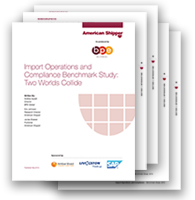
american_shipper-130529 (2)The 2013 Import Operations and Compliance Benchmark Study: Two Worlds Collide has just been released! This report is based on a study recently conducted by American Shipper and BPE Global to learn more about the issues impacting U.S. import operations and compliance managers.

The findings suggest that best-in-class shippers are integrating import compliance and operations functions to better leverage resources and investment in technology, leading to greater efficiencies.

Key focus areas include:

  • Import operations and compliance reporting structures
  • Customs filing timeliness and accuracy
  • C-TPAT and ISA participation and effectiveness
  • Operations and compliance technologies
  • The blend of operations and compliance functions

Align your import practices with best-in-class operations - download this complimentary report today!

Crocs Inc. Facing $36 Million in Fines from U.S. and Mexico

crocsCrocs Inc., a worldwide shoe manufacturer, disclosed in its 10-K filing last week that the company may owe up to $36.2 million in fines to U.S. and Mexico Customs and taxing authorities. This estimate is based on two separate audits by the U.S. Customs & Border Protection agency and Mexico’s Federal Tax Authority.

On January 9th, Crocs received notice from Mexico’s Federal Tax Authority that they could be facing a fine of $22 million, based on the value of raw materials imported into the country. These fines were discovered during an audit of the company from January 2006 to July 2011. Crocs officials have claimed that the Mexican Federal Tax Authority found no major discrepancies during the audit’s first phase, which covered capital equipment and finished goods. The second phase, which covered raw materials, revealed the potential fines.

“We believe that the proposed penalty amount is unfounded and without merit,” Crocs noted in its 10-K. “We have retained local counsel to handle the matter and who will argue that the amount due in connection with the matter, if any, is substantially less than that proposed.”

In addition, a draft audit report by the U.S. Customs & Border Protection for the period of 2006 to 2010 cited unpaid duties of $14.3 million. The company, who is disputing this initial report, does not expect a final report and notice of formal claim from Customs until the middle of this year.

For more information, please read this article from the Denver Business Journal.