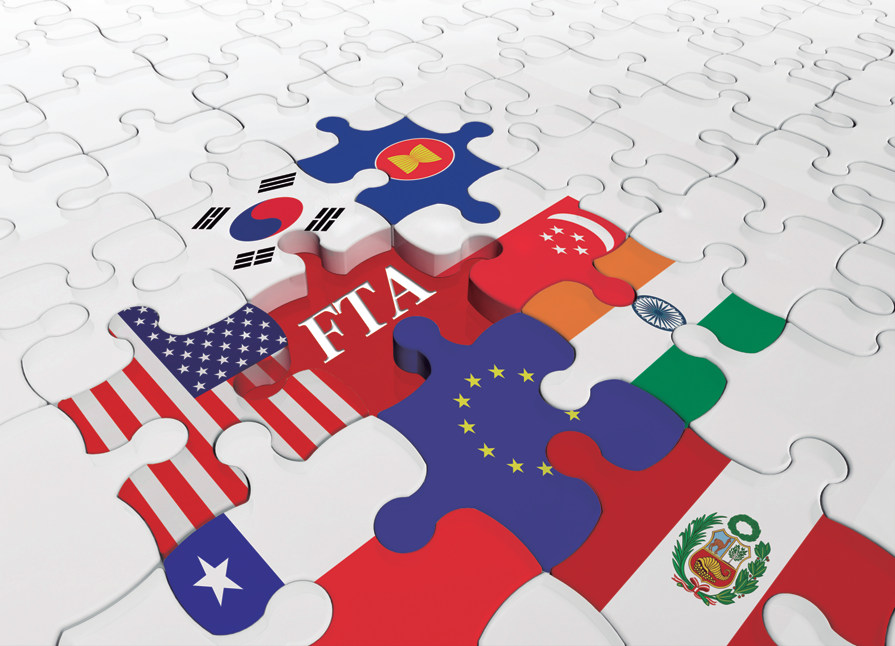
In the early 2000’s, bilateral trade agreements started popping up in Asia at a feverish pace. As opposed to multilateral trade agreements, bilateral agreements are negotiated between two individual countries. Although the removal of additional parties alleviates the process of negotiating terms and conditions, this is merely a short-term benefit. The quick fix of bilateral agreements ultimately results in an increased amount of free trade agreements as a means of compensating for unaccounted parties.
Read More
Topics:
China Trade Management,
Duty Management
If 2016 taught us anything, it’s that the global supply chain can’t expect a continuation of the status quo, and even the surest predictions can be wrong. With last year’s tumultuous end in the rear-view mirror, global companies powering ahead into 2017 must be ready for regulatory change – both the predicted and unexpected.
Read More
Topics:
Duty Management,
Import Compliance,
Export Compliance,
Free Trade Agreements
Billed as a “major milestone for the global trading system”, the World Trade Organization (WTO) Trade Facilitation Agreement (TFA) entered into force on February 22, 2017. It is the first multilateral agreement concluded since the creation of the multi-country trade-focused body in 1995. The TFA negotiations concluded during the Bali Ministerial Conference in 2013, but finally went into force yesterday after two-thirds of its members ratified the agreement.
Read More
Topics:
Duty Management,
Global Trade Management,
Free Trade Agreements
Amber Road has previously reported extensively on the Comprehensive Economic and
Trade Agreement (CETA). Under negotiation for almost five-and-a-half years, CETA
was approved in a close vote by the Members of the European Parliament (MEPs) on 15 February 2017. It was signed by both the European Union and Canadian representatives in October 2016, and first received a positive recommendation from the EU International Trade Committee in the European Parliament (EP) on 24 January 2017.
Read More
Topics:
Duty Management,
Foreign-Trade Zones,
Free Trade Agreements
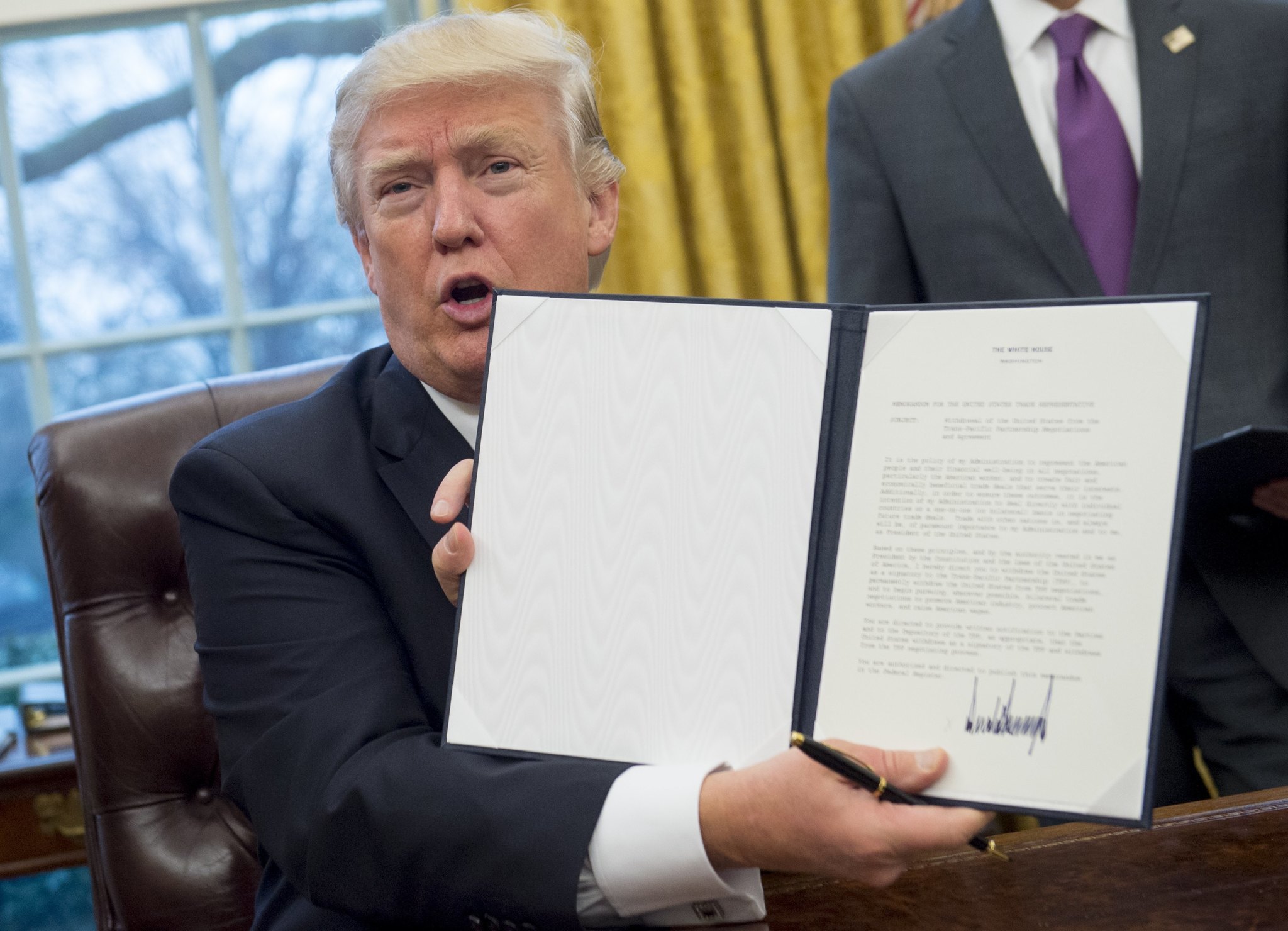
On his first full weekday in office, President Donald Trump swiftly abandoned the Trans-Pacific Partnership (TPP) with an executive order, standing by his Inauguration speech that “now arrives the hour of action." President Trump also signed an executive order to renegotiate the North American Free Trade Agreement (NAFTA). The orders fulfill the pledge Trump made in mid-November to immediately make dramatic changes and put “America first” on his first day in office.
Read More
Topics:
Duty Management,
Foreign-Trade Zones,
Free Trade Agreements
Even with all of the potential free trade agreements (FTAs) companies can take advantage of, it’s little surprise that many U.S. importers are spinning when it comes to qualifying goods based on the restrictive regulations for sourcing inputs and raw materials.
Read More
Topics:
Duty Management,
Supplier Solicitation Campaigns,
Free Trade Agreements,
Bill of Material Qualification
On February 29, 2016, Canada’s Minister of International Trade, Chrystia Freeland, and the European Union’s Commissioner for Trade, Cecilia Malmström, announced the completion of the legal review of the Comprehensive Economic Trade Agreement (CETA). After many years of negotiations, this European Union (EU) and Canadian treaty could finally be signed at the forthcoming EU-Canada Summit in Brussels on October 27, 2016. The EU considers it to be “a milestone in European trade policy” and “the most ambitious trade agreement that the EU has ever concluded.” Those in favor of CETA argue that it will boost trade between the EU and Canada. Critics argue that the agreement is unduly favorable to businesses and may lead to a lowering of regulatory standards. With a provisional application possible in the near future, let’s take a closer look at what’s at stake and why CETA matters.
Read More
Topics:
Duty Management,
Trade Agreement Identification,
Free Trade Agreements
Free trade agreements (FTAs) open up market access between signatory countries by reducing barriers to trade, which makes it easier and more cost effective for U.S. companies to export their products and services to trading partner markets. However, this process isn't always that easy. For many trade compliance professionals, the most complex challenge is understanding and navigating the various “rules of origin.” Rules of origin are highly complex and technical rules that describe how exported goods shipped to a country or region may qualify for duty-free or reduced-duty benefits under the applicable trade agreement.
Read More
Topics:
Duty Management,
Certificate Management,
Free Trade Agreements,
Product Claim Details and Storage
Continued from Chapter 4: Logistics
Minimizing duties is one of the fastest and easiest ways to squeeze significant financial returns out of a company's global supply chain. Duty minimization opportunities come in many forms, but many companies fail to take advantage of these programs due to the perceived difficulty of qualifying for and administering them.
The fifth video in our series explains how automating the duty management process is the best way to reap the benefits – like cutting duties and taxes by 80-100%.
Read More
Topics:
China Trade Management,
Duty Management,
Foreign-Trade Zones,
Free Trade Agreements
Free trade agreements and foreign trade zones offer an attractive opportunity for US importers to reduce or eliminate duties and taxes, but these benefits hide behind a maze of complex protocols, dense paperwork, and red tape. Sourcing and supply chain executives must also balance duty considerations against material quality, production capacity, and number of components.
Read More
Topics:
Duty Management,
Supplier Solicitation Campaigns,
Certificate Management,
Foreign-Trade Zones,
Free Trade Agreements







_t-1504634193565.png)